The Caucasian Challenge Route

“Serbia’s Jerusalem”

This is how Serbian Foreign Minister Vuk Jeremic phrased their situation implying on Kosovo’s status for Serbian people.

“Kosovo has a deep historical and spiritual meaning for the Serbian people, it is, in a way, our Jerusalem. We cannot accept unilateral conclusions by those governing in Pristina,” he said.

Well, this is a good example of the completely different thinking on the two sides of the Ibar river. The bridge over that river is not connecting but separating the inhabitants of Kosovska Mitrovica and – symbolically – Serbia from Kosovo.

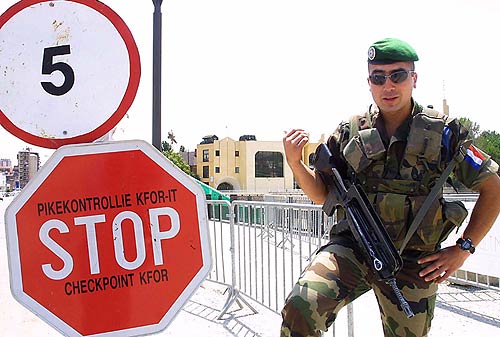
KFOR post by the bridge of Kosovska Mitrovica - the divided city

There was a serious threat for conflict on May 30 and only the KFOR and EULEX forces prevented the fight between Albanians and Serbians.

For the details, click HERE.

For a Hungarian article, click here.

This situation alone is interesting for the participants of the Caucasian Challenge, but what makes it even more interesting that the folks on the 2 sides of the river are pretty pissed off each other nowadays. And we’re going to cross this town on Day 2 of our challenge.

We are not even surprised reading the news, it seems that ethnical and political conflicts or natural disasters follow the route of the Caucasian Challenge each year.

In 2008 right before the start the Russian-Georgian war bursted out, luckily it more or less calmed down before we got there. Same year there were fights between Karabakh and Azeri forces on the frontline, again, a couple of months before we arrived there.

Last year an earthquake of magnitude of 6.2 on the Richter scale struck Northern Georgia, not far from the place we stayed that time. Then just before we were leaving for Europe again, we heard about the devastating flood in Turkey, stopping some of the teams around Istanbul.

We have no idea what we face this year but we are positive that both people and nature will work on entertaining us…


Attila

Arrived to Turkey

I had to wait another day for the part as our Pajero had a stronger spring and a longer shock absorber than the standard so they didn’t have it on stock, but they get it by next morning. And the part was half price than back in Hungary, I wonder why…

Anyhow, since I had to wait I drove back to Kavala and spent an unplanned night there on the beach (what a disaster) and relaxed a bit.

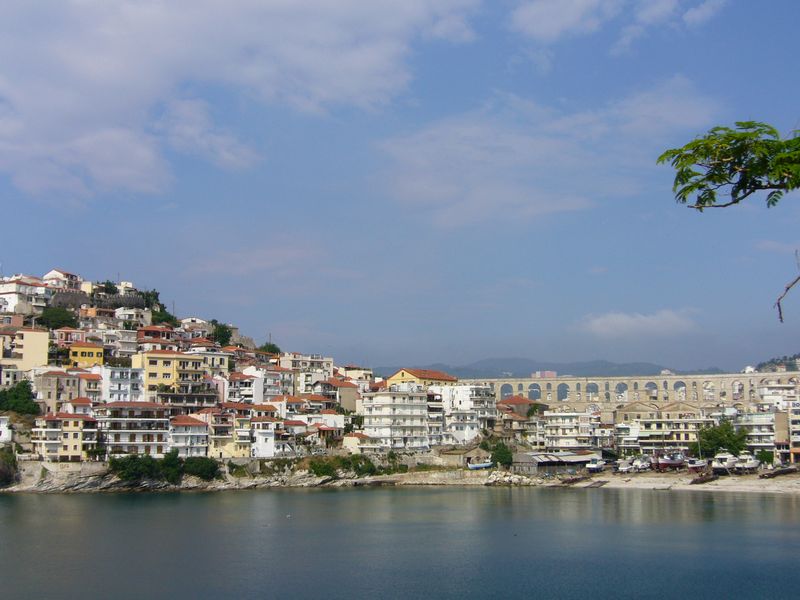
Kavala town by the sea

And Kavala food. Yum.

Saturday morning they quickly changed the shock absorber, I got a coffee and played with the mechanic’s kids. And finally paid a very low labour fee, again, half price.

After we said goodbye I was off towards Turkey. The border crossing took only half an hour and the visa was only 15 Euros for a multiple one (2 years ago it was five hours and the visa was 40 Euros for a single entry, so things go the positive way here). As usual, I had to chat with the border guards but after 2 Puskas, 1 Albert and 8 “ah, Macaristan” and lots of smiling, was on the way towards Istanbul.

I previously decided to drive only till Tekirdag as it’s an important site for us Hungarians and we had no chance so far to have a look at it. We stopped there once but arrived at 1AM and left at 7AM, so no sightseeing.

Fishermen's boats in Tekirdag

Turkey is surprisingly big and you realize it once you drive around the country. For fans of numbers:  780500 square kilometers and 73 million people. Quite interesting that even today and despite the growing tourism 80% of tourism is local.

And now it’s low/pre-season, and weekend, so zero foreigners, lots of locals and me. Everyone is incredibly kind and try to grab the oppotunity to use their school-English. I can’t understand Lonely Planet, they say it’s a dangerous country in general. Well, I don’t know where the authors have traveled but I never felt danger anywhere.
OK, the turks say the Kurdish eat Turks. (Actually the Serbs think the Albanians eat Serbs.) We have spent enough time among kurdish people and we are all alive.


Locals here very much take care of the Hungarian-Turkish relationship and history, another good example was 3 years ago the Kossuth house in Küthaya, and here the “Rákóczi kaddesi”, the place where Ferenc Rakoczi II lived and died in exile. And everyone knows what this is all about. OK, they were invaders and ruled in Hungary for 150 years, but you know, it’s like the Monty Python’s Life of Brian, where the leaders of the Judean People’s Front ask the question: “What have the Romans ever done for us?” One of my favourite scenes. So we like it or not we learned a lot from them.

The Rakoczi house in Tekirdag

So,  scouting part I is completed and finished a bit East of Istanbul. Part II is planned for mid-June.

Stay tuned.

Sz.

From the Albanian mountains to the Greek beaches

Kalispera! (meaning “good evening” I guess)

I finished the blog in Peja. I wanted to wake up early and finish at least the half of the next rally stage and get somewhere around Peshkopi.

When I was in Albania for the first time I was a bit worried… the image of the country is not really good. Now after 3 years and my fifth tour here I have similar feeling like with Georgia:  how  good is to be here again!

I don’t know if you met anyone having bad memories with this country, I haven’t. OK, it’s run down sometimes and there are no roads especially in the East, but the people are so amazing.


The Albanian Switzerland.

There are a couple of roads towards Tirana, the capital and in South by the coast, but the rest… from North to South along the Macedoniain border it’s virtually impassable in European terms. If somebody wants to get from Kukes to the Ohrid lake (apart from idiots like us) they need to drive 200 kilometers West to Tirana, and back 150. While the whole distance on “no roads” is 130.

Well, this 130 kilometers is 11 hours when it’s not raining and you find the right road for the first attempt.


Road to Kukes

It was more yesterday as there were serious rains in the region and I had to wait for hours while they pushed the rocks and mud from the “road” with a dozer.  At least I had time to lower the tire pressure.

Kukes was a routine drive where I found a fancy little hotel for the group.

Later on while driving towards Peshkopi I met a most interesting British couple in their 60′s  driving an old MG convertible. Since I’m driving a car on British plates too and there is no traffic over there at all, we made friends soon.

Their story is short… they started thinking back home and asked the question: what if?… and they were off.

They were pretty amazing with that oldtimer they managed to cross everywhere. I advised them to cross the border to Macedonia at Debar if they want to use their car in the future and don’t check the route in the South.

A beautiful British MG...

... rolling through Albania.

I got a quite new edition Albanian road map in Peshkopi and discuss my options with the waiter in the hotel we stayed last year. I wanted to check a route for 2WD cars but after I made half of the distance it turned out that it’s impassable due to rock fall. But they knew another road, and another, and so on.

I drunk 5 coffees with locals in different villages bars while asking for the route – of course they didn’t let me pay anywhere, although I tried. As usual, you can’t just ask for direction and go… they are happy to meet someone from the outside world and want to drink and chat with you.

I drove down to Pogradec in dark (that was a funny drive in darkness) where I found the accommodation for the rally and wanted to sleep after 16 hours of offroading.

As that place is a camping by Lake Ohrid and still not in the season, the don’t really have rooms – but as they looked at me they gave me a nice supper and made the couch in the “Piano Bar” for me so first time in my life (OK, not to mention the unintentional ones) I slept in a bar. “The Transporter” was on TV in Albanian, a great evening indeed!

My accommodation - in the bar.

Compared to my previous day, today’s drive covering 600 km was pretty easy. I didn’t mind driving on good asphalt and do more than 70 km an hour not 15.
I can feel and see the crisis here, the place I stopped for tonight is a resort but lots of shops and hotels are closed, fewer tourists come… but the Greeks are relaxed, they don’t complain.

One of the rear shock absorbers of the Pajero died on the Albanian “highways” but fortunately I found a nice cheap repair shop not far from my place so they will do the repairs today and I can continue to Turkey tomorrow.

Sz.

Kosovo and Albania – two countries, one nation

Tungjatjeta!

(Meaning “Hello” in Albanian, but the pronunciation… huh, we always struggle with this language…)

This day was shorter than yesterday but it was equally interesting. We agreed on all the details with the owner of the hotel in Ivanjica, also tested the restaurant which turned out to be excellent. I travel with 2 chefs so if they say it’s very good I’m sure we won’t have any problem with the food and drinks.

We learned from previous rallies that having a kick off party the night before the start is not a very good idea as most of the participants do their last minute preparations, spend their time with the families or whatever, they seem to be busy. So we decided to organize the party on the first night in Ivanjica where there shouldn’t be excuses for partying…
All you travelers, get ready for a kick ass kick off party in Serbia!

After some driving around I found the right way to Kosovo and got there relatively fast.

Err... what is this exactly?

The Serbian side of the border is nothing special, just 2 minutes and 3 dobar dans.

The more interesting things we experience later.

The Serbian - Kosovo border

This corner of Kosovo is inhabited only by Serbs… I knew this but would not know that I see only Serbian flags, cyrillic signposts and Serbian number plates here. Well, 4-5 out of 10 cars don’t have number plates at all. And the reason is that after Kosovo declared its independence, they issue only new number plates with Kosovo symbols. And the proud Serbs are not willing to put these plates on their cars, they just throw them into their trunks.
Civil disobedience, simply, but it seems to be OK . There’s no real government in this part of the country, we can only see KFOR vehicles here.

This odd situation is even more tangible when reaching Kosovska Mitrovica, the biggest town in the region. A city divided by a river but much more divided by cultural differences.

Up to the bridge it’s just like anywhere Serbia. But on the other side it’s the typical Albanian bustle, VW Golfs and Hummers and the white KFOR Land Cruisers are substituted by Italian and Hungarian KFOR vehicles. A petrol station and a car wash at every corner and almost everyone speaks at least a little English in this part of the city. Such a difference in one city is really amazing.

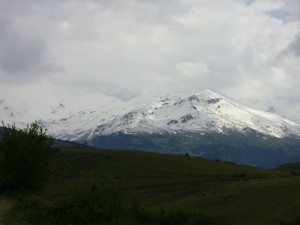
The road to Peja, our favourite town is even more scenic with growing mountains and the snow covered peaks of  Montenegro in front of us.

"Black" mountains of Montenegro

Since we left Ivanjica pretty late today and I kept on setting the challenge points I reached Peja late afternoon. As it’s not a smart idea to drive on the world famous Albanian back roads at night I decided to sleep in Peja. Nice hotel, free wifi and the best Beer in the region (called Peja). What else should a tired traveler need? Food. And I think I had the best döner in my life in a corner shop near the hotel.

Tomorrow I head for Albania, one of the all time favourite countries of CC participants.

Keep you posted!


Szabolcs

Scouting for Caucasian Challenge 2010 started on Monday

Just like in the previous years, we do a scouting trip before the actual event this year too. You never know what changes when and how in this region, hotels close, better ones open, border posts close or even roads disappear from the map.

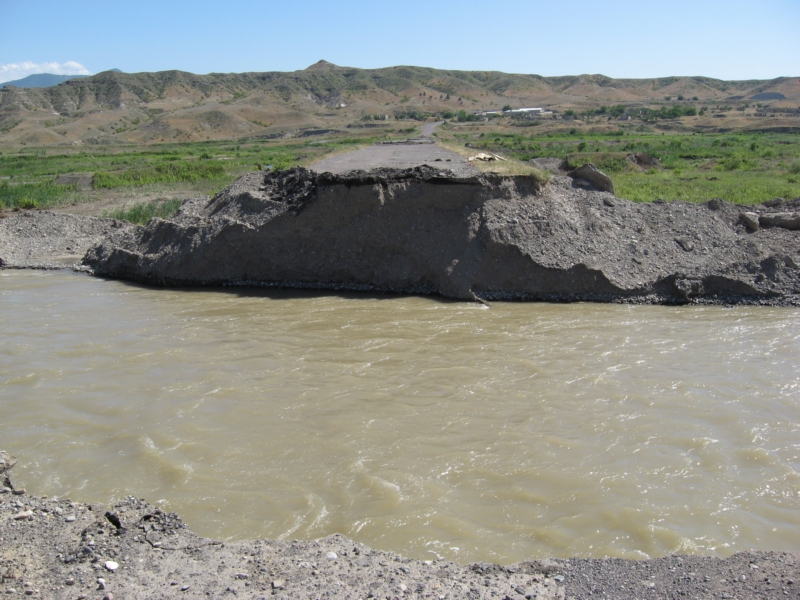
All these happened in the past. We wanted to cross the border in 2009 the same place we did in 2008 and they told us it stopped working as an international border. Nice, we had to find an alternative one. Next, we were happily driving in Karabakh on a well known “main road” when we were stunned realizing that a river was flowing where the road should have been.


The main road in Karabakh


So the scouting team has started to make the plan alive, finalize the route, set the challenges for the competition, find the best accommodation options, and collect all necessary info for the participants. We are lucky to have Nenad with us, a Serbian guy who lives in Budapest and has contacts all over the region. It was nice of him joining us for the first couple of days.

The idea was to spend the first night of the rally in a national park in Serbia. This was the first surprise the scouting team had to face. The lovely mountain resort only existed on the web and in some people’s dream.

There was nothing ready for tourism, we only found some weekend houses, an empty hotel waiting for renovation and no infrastructure. The local bar was (obviously) open and the point when we decided to give up this plan was when a local guy told us it’s not uncommon at all to have snow in July or in September and the peak temperature rarely exceeds 15 C in the summer.


Locals relaxing in the Bele Vode bar


Plus we were freezing like hell in this lovely late-Spring weather. Honestly we were not expecting this…


Nenad says enough is enough.


Spring in Bele Vode. The point of return.


Luckily we found a lovely little town near the “mountain resort” with a nice little hotel and some cool restaurants. Ideal for party for the first night.


Ivanjica boulevard.


We already like this place: it’s called The Last Supper. We wonder why…..

The Last Supper

We keep in going towards Kosovo today. A nice challenge for day 2 is the border crossing between Serbia and Kosovo.

We keep you posted, check for daily updates in this blog!

Szabolcs